

Open almost any contractor’s truck box or DIYer’s garage drawer and you’ll find the same thing: a pile of half-used oscillating tool blades, sometimes called multi tool blades depending on who you ask. One for wood. One for metal. One for drywall. A couple more that snapped a tooth halfway through a job and got tossed back in the drawer anyway, because who wants to throw away a blade they paid for?
That drawer is basically a receipt for money you didn’t need to spend.
Most oscillating blade brands split their lineup by material. Buy this one for wood, that one for metal, another for plastic, a different one again for fiber cement siding. On paper it sounds like precision engineering. In practice it means:
You’re stopping mid-cut to swap blades every time the material changes. On a siding job that might mean cutting through wood trim, then metal flashing, then fiber cement board, all within a few feet of each other. Every swap costs you a couple of minutes. Multiply that by a dozen swaps a day, a few hundred days a year, and you’ve lost real hours you could’ve billed.
You’re also carrying more inventory. More blades in the truck means more SKUs to track, more trips back to the hardware store when you run out of the one you actually need, and more money tied up in blades sitting unused while you work with a different one.
And the blades themselves often don’t hold up. A lot of the cheaper options on shelves at the big box stores dull or chip after a cut or two on anything with embedded nails or screws, which is most demolition and remodel work.
A High-Strength Carbide™ oscillating multi tool blade is built to cut through wood, nails, screws, thin metal, plastic, and siding without needing to be swapped out between materials. Instead of reaching for a different blade every time the job changes, you leave one blade in the tool and keep working.
That’s the entire value proposition in one sentence: fewer stops, fewer blades, less money spent replacing what wore out too fast.
It’s worth being upfront that this isn’t a blade for cutting concrete slabs or heavy masonry. For grout, tile, and stone work, a diamond-coated blade is still the right call, and that’s a separate category. But for the everyday mix of wood, fasteners, thin metal, and siding that makes up most demo and remodel work, one carbide blade covers it.
The honest objection is price. A high-strength carbide blade costs more than a bargain-bin blade at the hardware store. If you’re comparing sticker price to sticker price, the cheap blade wins every time.
But that’s the wrong comparison. The real number that matters is cost per cut, not cost per blade.
Think of it the way you’d think about buying a reliable car instead of a beater. The beater’s cheaper to buy, but you’re back in the shop every few months, losing time and money to repairs that add up to more than the difference in price would’ve been. A blade that costs more but survives hundreds of cuts across multiple materials, instead of dulling out after the first tough one, isn’t the expensive option. It’s the cheap one, once you count what you actually spend to get the job done.
Run the math on your own jobs. If a bargain blade costs $8 but needs replacing every other job, and a carbide blade costs $25 but lasts through dozens of jobs across different materials, the carbide blade wins on cost long before you even factor in the time you saved not swapping blades or driving back to the store.
Contractors and remodelers running multiple jobs a week feel this the most. Every blade swap and every supply run is time not spent on billable work. Standardizing on one blade that handles most of what a job throws at it is a small change that adds up across a year of work.
DIYers get a different version of the same benefit. You’re not going to keep four specialty blades on hand for a project you do twice a year. One blade that reliably gets through wood, screws, and the occasional metal bracket means you’re not standing in the tool aisle trying to guess which blade you need before you’ve even started.
Different job, different blade. Diamond-coated oscillating blades, whether in a segment boot shape for tight corners or a straight head for longer runs, are built specifically for abrasive materials like grout, tile, and stone. Trying to force a carbide wood-and-metal blade to do that work will wear it out fast and won’t give you a clean result. If your work includes both categories, a carbide blade for the general cutting and a diamond blade for the tile and grout work is the combination that covers everything without wasting money on the wrong tool for the wrong material.
If most of your cuts are wood, fasteners, thin metal, plastic, or siding, a high-strength carbide blade is the one blade to keep in the tool. If you’re regularly cutting grout, tile, or stone, add a diamond blade in segment boot, straight head, or finger rasp shape to the mix for that specific work. That’s really the whole decision tree. You don’t need five blades for five materials. You need the right blade for the two or three categories of work you actually do. For a deeper breakdown of every blade shape and when to use it, see our full multi tool blade guide.
A drawer full of cheap, material-specific blades feels like the safe choice because each one is inexpensive on its own. But the real cost shows up in the time spent swapping blades, the trips back to the store, and the blades that wear out after a cut or two on anything tough. When people search for the best oscillating multi tool blades, what they’re usually really after is the blade that gets the most jobs done for the least hassle. A single high-strength carbide blade costs more per blade and less per job, which is the number that actually matters once the work adds up.
For straightforward metal cutting, a good thin aluminum oxide or zirconia cutoff wheel from a reputable brand will get the job done — just make sure the thickness, abrasive type, and RPM rating match your project and your grinder. But if you find yourself constantly switching between wheels for different materials, or replacing cutoff wheels faster than you’d like, it’s worth taking a look at multi-material diamond blades as a longer-term alternative.
If “best value” means finishing more work with fewer blades, fewer swaps, and cleaner results, the winner is clear:
➡ WonderBlade™ High-Strength Carbide™ Oscillating Tool Blade
Built for general-purpose, multi-material cutting with the durability and control pros expect—and the versatility DIYers need.
Shop the blade:
https://wonderblade.com/high-strength-carbide-oscillating-blade-1
Learn more about WonderBlade™:
https://wonderblade.com
Watch the comparison video:
https://www.youtube.com/watch?v=b01S7eoalKw
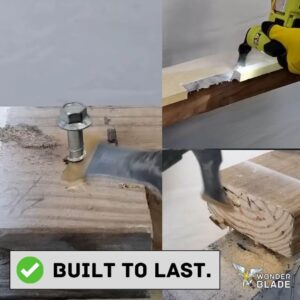
This blade stands out as one of the strongest in its industry due to its High-Strength CarbideTM teeth, known for their exceptional endurance and cutting power, as opposed to ordinary blades, which become dull over time.
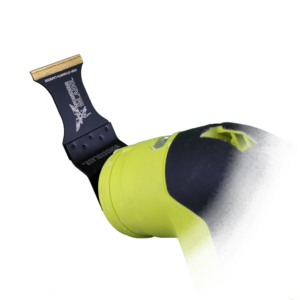
*However, the major issue is that many blades that you’ll find in your local hardware store tend not to last, here at WonderBlade we have an all around General Purpose Oscillating Tool Blade that lasts time and time again against hundreds of cuts through wood, fiber cement, sheetrock, plastic and more*