
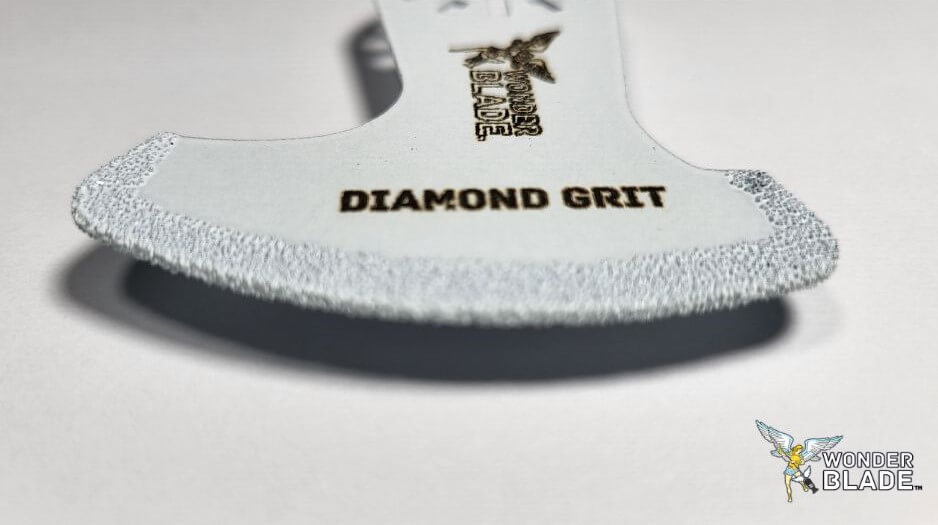
Grout removal has a reputation for being one of the most frustrating parts of any tile job. It’s slow, it’s dusty, and if you’re using the wrong blade, it can chew up the tile edges you’re trying to protect. Anyone who has tried to muscle through old, hardened grout with a standard blade knows the feeling of watching it glaze over and stop cutting halfway through a bathroom floor.
The Diamond Segment Boot Blade exists to solve exactly that problem. It’s shaped and coated specifically for grout and tile work, and the difference shows up the moment you compare it to a generic blade pulled off a hardware store shelf.
Not every oscillating blade shape is built for the same job. The segment boot shape has a wider, more stable profile than a straight head or a finger rasp, which makes it especially good at two things: getting into tight corners around tile edges, and holding a straighter line when you’re working a longer stretch of grout.
That stability matters more than it sounds like it should. A blade that wobbles or flexes under pressure doesn’t just slow you down, it also risks nicking the surrounding tile, which turns a grout removal job into a tile replacement job. The segment boot shape is built to stay controlled in the joint, so you’re removing grout, not damaging the material around it.
Grout is abrasive. It’s essentially a form of hardened cement, and cutting through it repeatedly wears down a standard carbide or bi-metal blade fast. That’s why grout-specific blades use diamond grit instead of teeth. Diamond particles bonded to the blade edge grind through the grout rather than tooth by tooth cutting through it, and that grinding action holds up far longer against an abrasive material than standard blade teeth do.
The practical difference shows up in how long the blade keeps performing. A standard blade pushed into grout work will often glaze over after a relatively short run, losing its edge and requiring more pressure and more time to finish the same amount of grout. A diamond blade built for the job keeps cutting at a consistent pace much longer, which is the entire point of paying more for a blade designed around the material instead of a generic multi-purpose one.
It’s tempting to reach for whatever blade is already mounted on your tool rather than switching to something grout-specific. But using a carbide or standard blade on grout usually costs more in the long run than buying the right blade in the first place.
Here’s what that looks like in practice. A standard blade dulls fast against grout, so you end up pushing harder to keep cutting, which slows the job down and increases the odds of the blade slipping and marking the tile. You’re also likely to burn through more standard blades trying to finish a grout job than you would with a single diamond blade built for the material. What looks like the cheaper option on the shelf turns into more time on your knees and more blades bought over the course of the job.
Think of it the same way you’d think about using the right tool for any specialized task. You wouldn’t use a screwdriver to hammer a nail just because it’s already in your hand. A blade engineered for grout removal is the right tool for that specific job, and the time you save by not fighting a blade that isn’t built for it is worth more than the price difference on the shelf.
Tile and flooring contractors doing repeat grout removal jobs feel the difference the most. A blade that keeps a consistent cutting pace through an entire bathroom or kitchen floor instead of glazing over halfway through means fewer blade changes and a faster turnaround per job, which adds up across a busy week.
Remodelers and general contractors who hit grout work occasionally, mixed in with other demo and repair tasks, benefit from having one reliable blade on hand rather than guessing whether a standard blade will get through it. Nobody wants to discover mid-job that the blade they brought can’t handle the material in front of them.
DIYers tackling a bathroom or kitchen remodel get the same benefit on a smaller scale. Regrouting or removing old grout is already one of the more tedious parts of a tile project. The right blade won’t make it fast, but it will keep it moving instead of turning into an afternoon spent fighting a blade that keeps losing its edge.
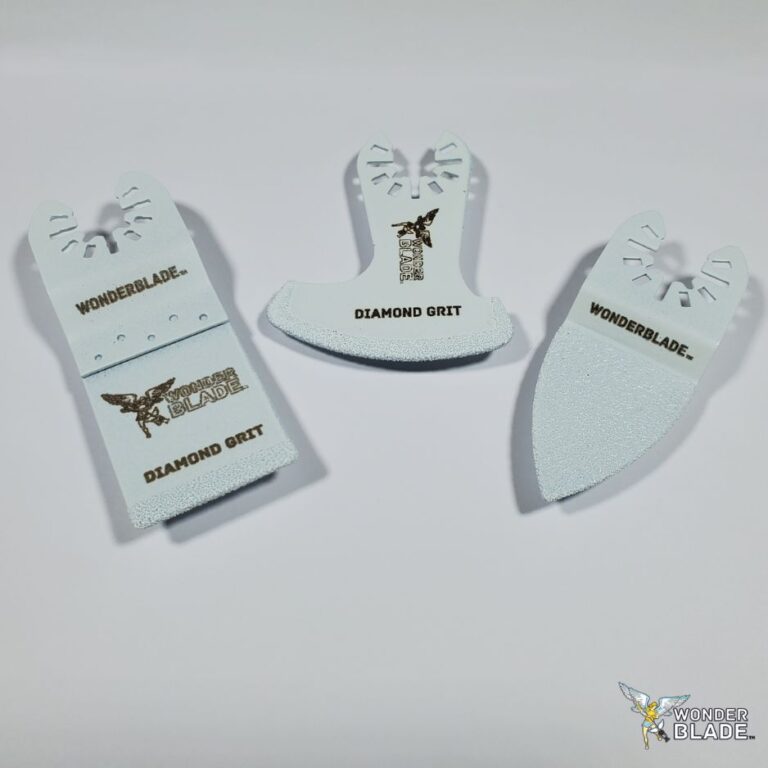
WonderBlade™’s diamond blades come in three shapes, and picking the right one depends on the specific part of the job you’re doing.
The segment boot shape is the versatile middle ground. It’s stable enough for longer runs of grout and maneuverable enough to handle corners and edges, which makes it the shape most people reach for first when they’re not sure which one they need.
The straight head blade is built for long, consistent lines. If you’re clearing grout across a large floor with mostly straight joints, the straight head design gives you faster, more consistent removal across that kind of run.
The finger rasp shape is the specialist for tight, intricate spaces. Around outlets, in corners, or on small detail sections where a wider blade can’t fit, the finger rasp’s narrow profile reaches where the other two shapes can’t.
For most grout removal jobs, especially ones that mix corners, edges, and longer runs in the same space, the segment boot is the shape that covers the widest range of situations without needing to switch blades mid-job. For a deeper comparison of all three shapes and grout-cutting techniques, check out our full guide to cutting grout.
A few habits make a real difference in how long any diamond blade lasts and how clean the results look. Let the diamond grit do the work instead of forcing the blade through the joint. Pushing harder than necessary generates more heat and wears the blade down faster without actually speeding up the cut. Use a moderate, controlled speed rather than maxing out the oscillating tool, and keep the blade moving rather than holding it in one spot, which prevents heat buildup that can damage both the blade and the surrounding tile.
It’s also worth noting what this blade isn’t built for. It’s designed specifically for grout, and pushing it into unrelated materials like wood or metal will wear it out fast without giving you a good result. Keep it dedicated to grout and tile work and it’ll hold up through significantly more jobs.
Every Diamond Segment Boot Blade is backed by the WonderBlade™ Guarantee, which covers manufacturer defects like a blade that snaps or breaks down with minimal or no use. It’s not a substitute for using the blade correctly, but it means you’re not taking on the full risk of trying a new blade for the first time.
Grout removal punishes the wrong blade choice more than most cutting tasks. A standard blade will get through some grout, eventually, but it’ll cost you more time, more replacement blades, and more risk of damaging the tile around the joint than a blade built specifically for the material. The Diamond Segment Boot Blade is shaped for stability in corners and along longer runs, coated to actually hold up against an abrasive material, and backed by a guarantee if something goes wrong. For anyone doing regular grout or tile work, it’s the blade that turns one of the most tedious parts of the job into one of the more manageable ones.
If “best value” means finishing more work with fewer blades, fewer swaps, and cleaner results, the winner is clear:
➡ WonderBlade™ High-Strength Carbide™ Oscillating Tool Blade
Built for general-purpose, multi-material cutting with the durability and control pros expect—and the versatility DIYers need.
Shop the blade:
https://wonderblade.com/high-strength-carbide-oscillating-blade-1
Learn more about WonderBlade™:
https://wonderblade.com
Watch the comparison video:
https://www.youtube.com/watch?v=b01S7eoalKw
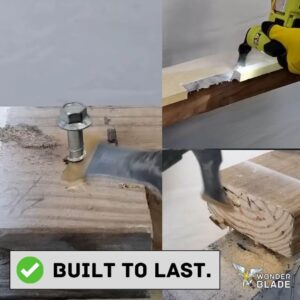
This blade stands out as one of the strongest in its industry due to its High-Strength CarbideTM teeth, known for their exceptional endurance and cutting power, as opposed to ordinary blades, which become dull over time.
*However, the major issue is that many blades that you’ll find in your local hardware store tend not to last, here at WonderBlade we have an all around General Purpose Oscillating Tool Blade that lasts time and time again against hundreds of cuts through wood, fiber cement, sheetrock, plastic and more*