

If you’ve ever stood in the tool aisle staring at a wall of grinder discs, you already know the problem: there’s a different wheel for almost every material, and none of them last as long as you’d like. Diamond blades solve part of that problem, but not all diamond blades are built the same way — and the differences matter a lot once you’re standing on a jobsite mid-cut.
This guide breaks down what actually separates a good diamond blade from a great one, the different types you’ll run into, and which one earns the title of best diamond blade for angle grinders in 2026.

If you want the short version: the WonderBlade™ ToughGrit™ Diamond Blade is our pick for the best all-around diamond angle grinder blade. It’s a 4.5″ blade with a 7/8″ arbor, rated for up to 13,000 RPM, and it’s built to cut metal and steel, ceramic and porcelain tile, brick and masonry, fiber cement siding, and wood — all with the same blade. It’s backed by the WonderBlade™ Guarantee against breakage and defects.
Keep reading for the full breakdown of why diamond blades outperform standard discs, what to look for before you buy, and how to pick the right one for your specific project.
A diamond blade isn’t really a “blade” in the traditional sense — there’s no sharp metal edge doing the cutting. Instead, it’s a steel core with industrial diamond particles bonded to the rim, usually with a metal or resin bond. As the blade spins at high RPM, those diamond particles grind away at the material rather than slicing through it like a knife.
This is why diamond blades can handle materials that would destroy a standard abrasive disc almost instantly — things like porcelain tile, brick, and concrete. The diamond segments are hard enough to grind through these materials without breaking down the way an abrasive wheel does.
Not every diamond blade is designed to do the same job. Here’s a quick rundown of the most common types you’ll find:
Continuous Rim Diamond Blades These have a smooth, unbroken diamond edge. They’re designed for chip-free, precise cuts — think porcelain tile, ceramic, and glass. The smooth rim means less chipping on delicate materials, but these blades tend to run hotter and are usually best for wet cutting.
Segmented Diamond Blades These have gaps cut into the rim, creating individual diamond “segments.” The gaps allow the blade to cool down between cuts and clear debris, which makes them better suited for dry cutting concrete, brick, and masonry. The tradeoff is a slightly rougher cut compared to a continuous rim.
Turbo Diamond Blades A hybrid of the two — turbo blades have segments with a wavy, serrated pattern instead of straight gaps. This gives you faster cutting speeds than a continuous rim blade while still producing a relatively clean edge. Turbo blades are a popular middle ground for general masonry work.
Multi-Material Diamond Blades This is where blades like the ToughGrit™ come in. Rather than being optimized for one category of material, multi-material diamond blades are engineered to handle metal, masonry, tile, fiber cement, and wood with a single disc. For anyone who works across multiple materials in a single day — which describes most contractors and serious DIYers — this category is where the real time and cost savings happen.
| Blade Type | Best For | Typical Price Range | Wear Rate |
|---|---|---|---|
| Continuous Rim | Porcelain, ceramic tile, glass | $10–$25 | Moderate |
| Segmented | Concrete, brick, masonry (dry cutting) | $15–$30 | Moderate |
| Turbo | General masonry, mixed cutting | $15–$30 | Moderate-Low |
| Multi-Material (ToughGrit™) | Metal, tile, brick, fiber cement, wood | ~$49.99 | Very Low |
The ToughGrit™ Diamond Blade is built around a simple idea: most people don’t want to own five different discs and swap between them every time they switch materials. Here’s what it brings to the table:
One important note: this 4.5″ blade is not recommended for cutting concrete slabs — for slab work, you’d want a larger diamond blade designed specifically for that application. But for the materials most people are actually cutting on a day-to-day basis — metal, tile, brick, siding, and wood — it’s designed to be the only blade you need to leave installed.
WonderBlade™ has put the ToughGrit™ blade through its paces on camera, cutting through multiple materials back-to-back without a blade change. A few worth watching:
There’s also an independent third-party review worth checking out if you want an outside perspective: “Review on WonderBlade™ ToughGrit General Purpose Diamond Blade” — https://www.youtube.com/watch?v=Z25VLIKCzg0
Before you buy any diamond blade — ours or otherwise — here’s what actually matters:
1. RPM Rating vs. Your Grinder’s RPM Every blade has a maximum RPM rating printed on it. Your angle grinder’s max RPM should never exceed that rating. Most 4.5″ angle grinders run somewhere between 10,000 and 12,000 RPM, so look for a blade rated comfortably above that (the ToughGrit™ is rated to 13,000 RPM).
2. Arbor Size The arbor is the hole in the center of the blade that fits onto your grinder’s spindle. 7/8″ is the standard size for 4.5″ and 5″ angle grinders in the U.S., but always double-check your tool’s specs before buying.
3. Bond Type and Segment Design The “bond” is the material holding the diamond particles to the steel core. Softer bonds wear faster but expose new diamond grit sooner, which is better for harder materials. Harder bonds last longer but can glaze over on soft materials. Multi-material blades are engineered to strike a balance across a range of hardness levels.
4. Wet vs. Dry Cutting Some diamond blades require water to stay cool, which isn’t practical for most jobsite or DIY work involving metal and wood. Dry-cutting blades, like multi-material diamond blades, are designed to manage heat without water — which matters if you’re cutting near electrical tools or simply don’t want the mess.
5. What Materials You Actually Cut This is the big one. If you only ever cut tile, a continuous rim blade is probably fine and cheaper. But if your week involves cutting metal conduit one day, trimming fiber cement siding the next, and chopping brick pavers after that, a single-purpose blade means constant changeovers — and that’s exactly the gap multi-material blades are built to close.
Even a well-built diamond blade can wear out faster than it should if it’s used incorrectly. A few habits make a real difference:
Can a diamond blade cut metal? Yes — multi-material diamond blades like the ToughGrit™ are specifically designed to cut metal and steel, and they tend to produce less sparking than standard abrasive cutoff wheels.
Do diamond blades wear out? All blades eventually wear down, but diamond blades — especially multi-material designs — wear far slower than abrasive cutoff wheels, which visibly shrink in diameter with use.
What size diamond blade do I need for my angle grinder? Match the arbor size (commonly 7/8″ for 4.5″ and 5″ grinders) and make sure the blade’s max RPM rating is equal to or higher than your grinder’s max RPM.
Are diamond blades safer than cutoff wheels? Diamond blades typically produce fewer sparks when cutting metal and don’t shrink in diameter the way abrasive wheels do, which helps maintain consistent guard clearance over the life of the blade.
Can I use a 4.5″ diamond blade to cut concrete slabs? Generally, no. 4.5″ diamond blades, including the ToughGrit™, aren’t recommended for concrete slab cutting — that job calls for larger, slab-specific diamond blades.
Can a diamond blade cut metal? Yes — multi-material diamond blades like the ToughGrit™ are specifically designed to cut metal and steel, and they tend to produce less sparking than standard abrasive cutoff wheels.
Do diamond blades wear out? All blades eventually wear down, but diamond blades — especially multi-material designs — wear far slower than abrasive cutoff wheels, which visibly shrink in diameter with use.
What size diamond blade do I need for my angle grinder? Match the arbor size (commonly 7/8″ for 4.5″ and 5″ grinders) and make sure the blade’s max RPM rating is equal to or higher than your grinder’s max RPM.
Are diamond blades safer than cutoff wheels? Diamond blades typically produce fewer sparks when cutting metal and don’t shrink in diameter the way abrasive wheels do, which helps maintain consistent guard clearance over the life of the blade.
Can I use a 4.5″ diamond blade to cut concrete slabs? Generally, no. 4.5″ diamond blades, including the ToughGrit™, aren’t recommended for concrete slab cutting — that job calls for larger, slab-specific diamond blades.
The “best” diamond blade depends on what you’re cutting — but for anyone who works across multiple materials and doesn’t want a different disc for every job, a multi-material diamond blade like the WonderBlade™ ToughGrit™ is hard to beat. One blade, rated to 13,000 RPM, that handles metal, tile, brick, fiber cement, and wood, backed by a guarantee against breakage.
If “best value” means finishing more work with fewer blades, fewer swaps, and cleaner results, the winner is clear:
➡ WonderBlade™ High-Strength Carbide™ Oscillating Tool Blade
Built for general-purpose, multi-material cutting with the durability and control pros expect—and the versatility DIYers need.
Shop the blade:
https://wonderblade.com/high-strength-carbide-oscillating-blade-1
Learn more about WonderBlade™:
https://wonderblade.com
Watch the comparison video:
https://www.youtube.com/watch?v=b01S7eoalKw
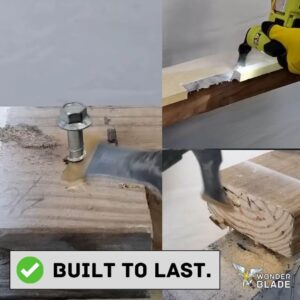
This blade stands out as one of the strongest in its industry due to its High-Strength CarbideTM teeth, known for their exceptional endurance and cutting power, as opposed to ordinary blades, which become dull over time.
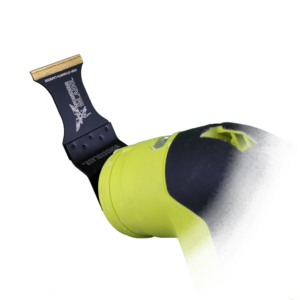
*However, the major issue is that many blades that you’ll find in your local hardware store tend not to last, here at WonderBlade we have an all around General Purpose Oscillating Tool Blade that lasts time and time again against hundreds of cuts through wood, fiber cement, sheetrock, plastic and more*