
If you have ever stood in the tool aisle looking at a wall of oscillating blades, you have probably noticed the packaging says things like Starlock, Starlock Plus, universal fit, or open back. It looks like a small detail until you get home and find out the blade you bought does not fit your tool.
That mix up happens to a lot of people, from first time DIYers to guys who have been on jobsites for twenty years. The multi-tool market has two main blade systems, and they are not interchangeable out of the box.
This article breaks down what each system is, how they are different, what each one does well, and how to figure out which one you need. By the end, you will know exactly what to look for the next time you buy a blade, and you will know how to use both types on the same tool if you need to.
Before we get into the details, here is the quick summary.
Universal fit blades attach with a bolt and clamp. They have been around the longest, they work with the widest range of older tools, and there are a huge number of blade shapes and materials to pick from.
Starlock blades lock into the tool with a different interface and are designed so you can change them quickly without a wrench. A lot of newer tools use it.
The two do not fit each other directly. But with the right adapter, you can run universal fit blades on a Starlock tool.
Now let us look at each one more closely.
For a long time, oscillating multi-tools were built with a similar mounting style. The back end of the blade has a pattern of holes and slots cut into it. The blade sits on the tool, a clamp goes on top, and a bolt tightens it all down. Because so many tool brands used a similar layout, blade makers began building blades to match, and the name universal fit stuck.
If you bought a multi-tool in the last decade or two, there is a good chance it takes universal fit blades. They work with many popular brands, and they have been the go to option for years.
Huge selection. Because universal fit has been around so long, there are blades for almost every job. Grout, tile, wood, metal, fiber cement, sheetrock, plastic, concrete, you name it. There are also lots of shapes, like boot, straight, half moon, and finger rasp.
Works across many brands. Many brands of tool take universal fit blades, so your blades are not tied to one manufacturer. If you work with other people, you can often share blades even when your tools are different brands.
Easy to find. You can find these blades at home centers, hardware stores, and online. That also tends to keep prices competitive.
Specialized blades. Because the market is so big, you can find blades built for specific jobs. Our Diamond Segment Boot Blade, for example, is made specifically for cutting grout, with a shape that gets into corners and narrow lines.
The main downside is the blade change. With a bolt and clamp, you need a tool to loosen and tighten it. It is not hard, but when you are swapping blades often, it takes a little more time than a tool free system. It also means keeping track of a bolt and a wrench.
Starlock is a newer blade mounting system introduced by Bosch and Fein, and it has since been adopted by other tool brands. Instead of a bolt and clamp, Starlock blades have a different interface on the back end that locks directly into the tool. You change blades quickly, and in most cases without any extra tools.
There are a few versions, usually called Starlock, Starlock Plus, and Starlock Max. They are generally matched to different levels of tool power and different types of work, so a heavier duty tool will typically use a heavier duty version. Check your tool’s manual to see which version it supports before you buy blades.
Fast blade changes. This is the big selling point. If you are going back and forth between different blades during a job, tool free changes save time and hassle.
Designed for newer tools. Many newer multi-tools, including models from Bosch and Flex, use Starlock. If you are buying a new tool today, there is a good chance it is a Starlock tool.
A growing ecosystem. More brands are making Starlock blades and tools, so the selection keeps getting bigger.
It is not compatible with universal fit. If you already own a pile of universal fit blades, they will not mount on a Starlock tool as they come.
Fewer specialty options and often higher prices. Starlock blades are newer, so the range of specialty shapes can be narrower in some categories than what you will find in universal fit. Depending on the brand and type, they can also cost more, though this varies a lot.
Here is how the two stack up.
Mounting. Universal fit uses a bolt and clamp. Starlock locks directly into the tool.
Blade changes. Universal fit usually takes a tool and a little more time. Starlock is built for quick, tool free changes.
Compatibility. Universal fit works with a wide range of tool brands, especially older and mid age tools. Starlock works with Starlock tools, which includes many newer models.
Selection. Universal fit has a very large selection of shapes and materials. Starlock has been growing, but the range can be narrower for some specialty jobs.
Can they be mixed? Not directly. But an adapter lets you run universal fit blades on a Starlock tool.
The answer depends on the tool you own, and the first step is to figure out what mount it has.
Look at your tool. If it has a bolt and a clamp holding the blade, it is a universal fit tool. If the blade locks into a tool free mount with no bolt, it is probably a Starlock tool. Your manual or the manufacturer’s website will tell you for sure.
Then think about the work you do. If you want the widest selection of blades for specific jobs like grout removal, tile work, or cutting a variety of materials, universal fit gives you the most choices. If you change blades constantly and want the fastest swaps, Starlock is appealing.
Then think about what you already own. This is where a lot of people end up. You may have bought a new Starlock tool but already own a collection of universal fit blades you love. Throwing those out and starting over is expensive. That is where an adapter comes in.
If you own a Starlock tool and want to keep using your universal fit blades, you do not have to give them up. An adapter sits between the blade and the tool and lets the two systems work together.
The WonderBlade Universal Fit to Starlock Adapter Set is made for exactly this. It lets you fit any universal fit oscillating blade onto a Starlock multi-tool, and it is compatible with Bosch, Flex, and many other Starlock oscillating multi-tools. The set includes the Starlock adapter, a screw, and an Allen key for tightening, along with an instruction card.
We also have a short video showing how to fit a universal blade to a Starlock multi-tool:
If you are a Dremel MM45 or MM50 owner, or have a Bosch MX30EC, we also carry a separate Oscillating Multi Tool Blade Adapter Kit made for those models.
Since WonderBlade oscillating blades are universal fit, they work on universal fit tools right out of the package, and with the adapter set, they work on Starlock tools too. Here is a quick look at what we offer.
Diamond Segment Boot Blade. Built for cutting grout. The boot shape works into corners and narrow grout lines, and it holds a straight line. Customers say it leaves clean edges without damaging the tile.
Diamond Straight Head Blade. Another diamond blade for grout and tile with a straight cutting edge.
Diamond Finger Rasp Blade. For grout and fine edging in tight spots.
High-Strength Carbide Blade. A general purpose blade made for cutting through fiber cement, sheetrock, plastic, concrete, screws, metal, and wood.
All of our blades are backed by the WonderBlade Guarantee, which covers defects and breakages.
Will the adapter work with my tool? It is made for Starlock multi-tools and is compatible with Bosch, Flex, and many other Starlock oscillating tools. If you have a question about a specific model, reach out to us through the contact page and we will help.
Do I need to buy anything else? No. The set includes the adapter, the screw, and the Allen key, along with an instruction card.
Can I use blades from other brands with it? The adapter is designed for universal fit oscillating blades, and customers have reported using blades from other brands with it. We recommend our own blades, of course, and they are backed by the WonderBlade Guarantee.
Starlock and universal fit are two different ways of attaching a blade to a multi-tool. Starlock is built for fast, tool free blade changes and shows up on a lot of newer tools. Universal fit has been around longer, works with a wide range of brands, and gives you a huge selection of blades for specific jobs.
Neither one is right or wrong. The best choice is the one that fits your tool and your work. And if you end up with a Starlock tool and a drawer full of universal fit blades, you do not have to choose. An adapter lets you use both.
Ready to get your blades working on your Starlock tool? Check out the Universal Fit to Starlock Adapter Set here:
And if you need blades to go with it, take a look at our Diamond Segment Boot Blade for grout, or our High-Strength Carbide Blade for general purpose cutting. Questions about your tool or your project? Reach out to us anytime and we will point you in the right direction.
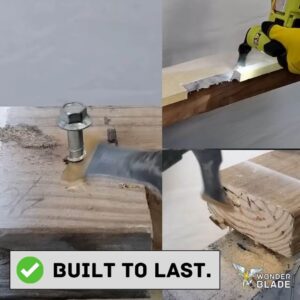
This blade stands out as one of the strongest in its industry due to its High-Strength CarbideTM teeth, known for their exceptional endurance and cutting power, as opposed to ordinary blades, which become dull over time.
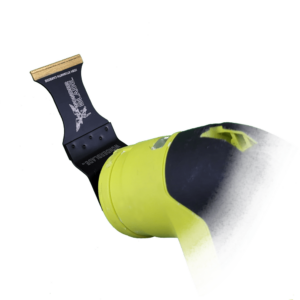
*However, the major issue is that many blades that you’ll find in your local hardware store tend not to last, here at WonderBlade we have an all around General Purpose Oscillating Tool Blade that lasts time and time again against hundreds of cuts through wood, fiber cement, sheetrock, plastic and more*